
Asian Publishers Week
Participant
Lee Hye Jae
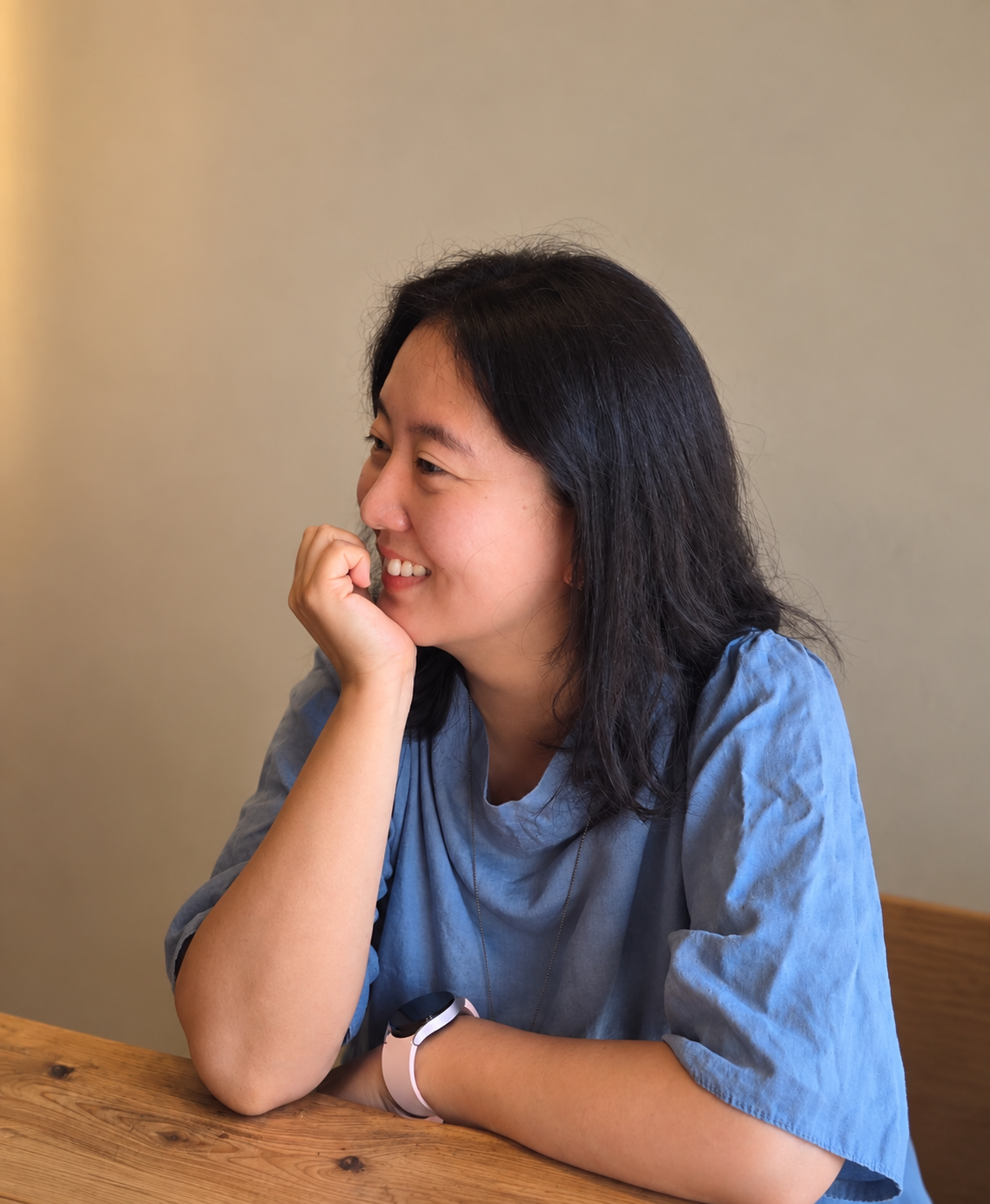
Country : Korea
Company : Chaekpol
Job Title : CEO / Publisher
E-mail : jumping_books@naver.com
Work Experience in Publishing
2009 Joined Tteuindol
Subsequently worked as an editor at Sakyejul, Woorihakgyo, Gimm-Young, and others
2021–present Publisher, Chaekpol (one-person press)
I am a book editor and planner with 17 years of experience, mainly in books for children and young adults, as well as broadcast-based content, humanities and social sciences, and self-help essays. At Chaekpol I am responsible for editorial planning and promotion.
Experience Related to This Year’s Topic
As a Publisher from Before AI
Time flows equally through every era, yet the past always seems to fly by unbelievably fast. I started making books in 2009, which makes this my 17th year as an editor. Over the years I have mainly planned and produced books for children and young people, and books I developed in other areas, such as broadcast-based content, humanities and social sciences, and self-help essays, have also done well. I now run Chaekpol, a one-person press entering its fifth year, which focuses on young adult fiction and nonfiction that teenagers and adults can both enjoy.
There is a catchphrase that has followed me since the day I entered publishing: “the worst slump in history.” If someone asked me whether that is true, I would say it is half right and half wrong. The “worst slump” has indeed come again and again, but just before we hit rock bottom, a glimmer of hope or rescue always seemed to appear. I feel that people’s chance encounters with books are gradually increasing. Perhaps hope can be found even in despair.
With all kinds of content pouring out every second and capturing instant attention, the physical book may look flat, limited, and plain by comparison. But isn’t everything in the world fundamentally text-based content? Living in an age with so much to see, whether with our eyes, our ears, or our other senses, we are constantly “reading” something at every moment.
Yet publishing in the age of AI is becoming more diversified and is giving rise to conflicts we have never seen before. Works produced with a single “click” and no real thought have appeared. Generated cover images that all look alike, and texts that are smooth but seem printed out without any feeling, are no longer rare. Before our eyes, we who have always tried to read carefully, publications that are “all too easy to read” keep piling up. AI may help make production quick and easy, but is that really only good for publishers? Can a book be made while erasing deeper thought and harder reflection? These questions grow deeper every day.
What Role Will AI Play in Publishing, and in My Work?
To see something is to read it, and I believe it is a matter of understanding and acceptance. I think publishing in the age of AI is a process of finding out how far we can make people willingly make the effort of this act of seeing.
Perhaps I am someone who moves too slowly for the age of AI. I agonize for days over the right copy for a back cover. I still write press releases in Hangul word processor, set up meetings one by one, and meet booksellers in person. Wanting to reach even one more reader, I sometimes hold small book talks at independent bookstores. Instead of mass-produced card news or online images for social media, I write posts that carry my sincerity. That is because I do not want to outsource all this time and effort of making and sharing books to AI. I do not want to rush through it the quick and easy way. The pace and grammar of a book cannot be replaced by anything else.
So, the more AI spreads, the more determined I have become to study the fundamentals of the publishing market. I enrolled in a graduate school of journalism and communication to explore print and publishing (I am currently on leave). By studying how to understand publishing, plan publishing content, and learn about the expanding future of production and distribution, I am doing what I can to become a publisher who is not intimidated by the age of AI. That courage is what led me to apply for Asian Publishers Week.
What would you like to discuss related to this year’s topic?
Can AI become a source of hope for publishing?
How much help should we accept from it, and how far should we use it? The ethical side will also matter.
If not hope, does it stand at the opposite end?
AI will not take readers away from us. But I think it can undermine readers’ discernment and standards, and the value of reading itself. Are there ways to address this? (From the perspective of the rise of irrational and unethical production such as one-click publishing, the deception of readers, and the breakdown of the market.)
Using AI as a simple tool vs. hiring AI as a capable colleague: which way should publishing go?
We can no longer separate AI from our lives. Could we embrace it if we see it as a production line toward better results (a new opportunity)? Or will we keep carrying the anxiety that publishing may lose its uniqueness (an ongoing crisis)?
Ultimately, where should publishing go?
In an era of accelerating uncertainty, what shape will publishing take as it moves forward? I would like to talk with publishers from many countries who share the questions and concerns of our time.
Your Company Profile CHAEKPOL
Company Name: Chaekpol
Company Address: Hwaseong-si, Gyeonggi-do, Korea
Number of Employees: 1
Specialty: Young adult literature, humanities and general nonfiction
Chaekpol, a one-person publishing house, began with the wish to capture the moment when readers, carrying dreams both small and large, leap into a book. We aim to create stories that hold the questions that make life meaningful and breathe small dreams into everyday life. We focus on young adult literature and nonfiction that both teenagers and adults can enjoy, and as of the end of September 2026 we have published 35 titles.
More than 90% of Chaekpol’s titles have gone into reprint, and our books continue to sell steadily in the field. We make each book with the hope that it can stay connected with readers for a long time.
Our books have been selected for a wide range of programs, including the Sejong Book Selection, the Literature Sharing program, the Youth Book of the Year in humanities, Morning Reading recommendations, Chaeksiat recommendations, and the content production support program, earning recognition for their quality and literary merit. Most recently, we signed an Arabic rights deal for Nam Yuha’s young adult novel Budi Annyeonghagireul (I Hope You Are Well), published in April 2026.